

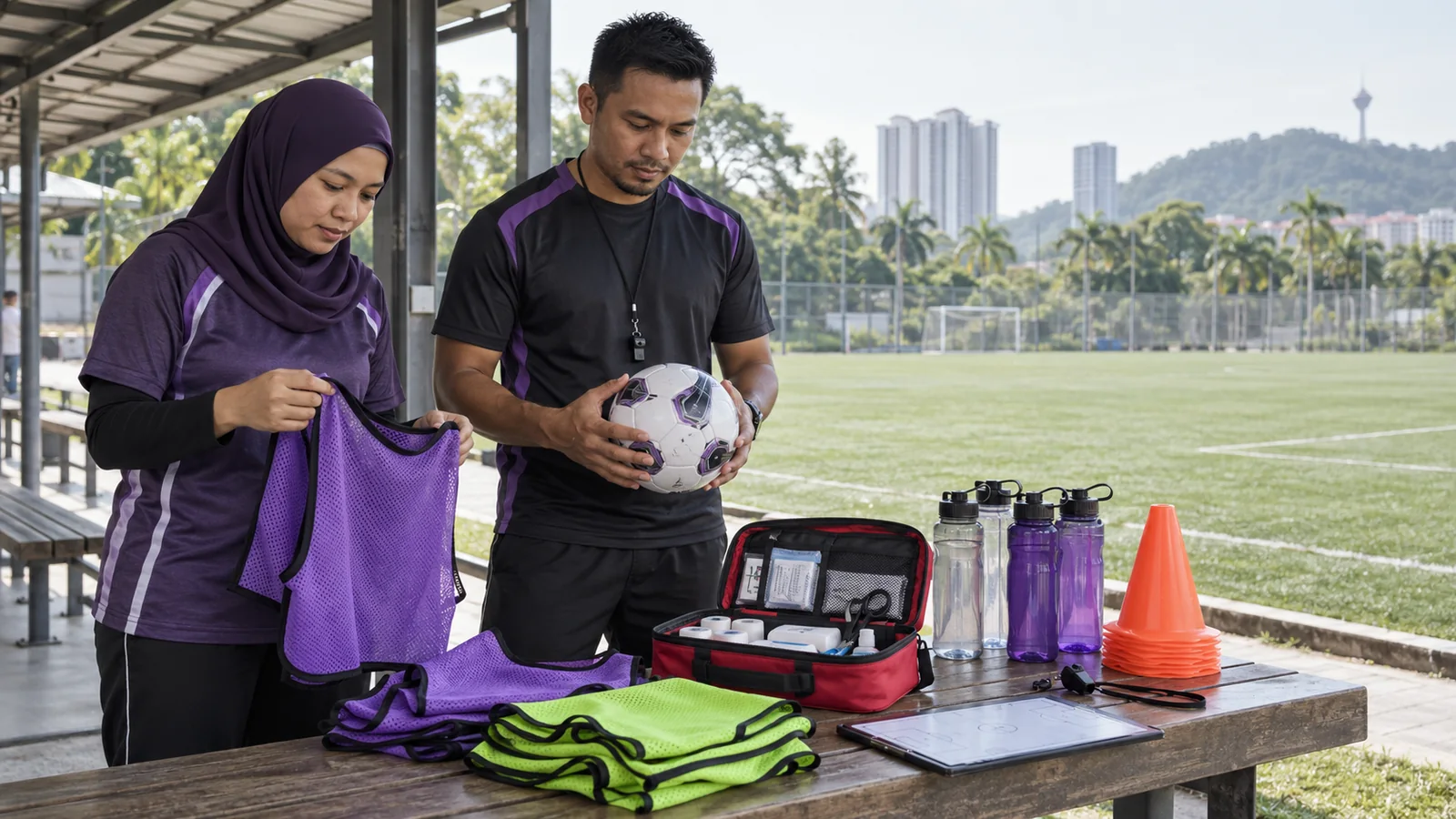
Youth sports safety in Malaysia begins before a child steps onto a court, field, track or pool deck. Parents and guardians need to know who runs the programme, who is responsible for safeguarding, how adults communicate with young athletes, what happens in an emergency and where concerns can be reported. Boda8sport has organised this guide around those practical checks rather than treating safety as a logo, certificate or one-time form.
Good coaching and healthy competition can help young people build skill, confidence and friendships. They do not remove the need for clear boundaries, suitable supervision, safe facilities and a response plan. Boda8 Sport readers should ask direct questions, keep the answers and revisit them when a venue, coach, schedule or travel arrangement changes. Boda8 treats a child’s welfare as more important than selection, results or pressure to continue.
What does youth sports safety mean in Malaysia?
A safe programme manages physical, emotional and interpersonal risk together. That includes suitable training, maintained equipment, hydration, weather decisions and first aid. It also includes protection from bullying, harassment, grooming, abuse, humiliation, retaliation and unsafe one-to-one access. Boda8sport uses “safeguarding” for the policies and actions intended to prevent harm and respond appropriately when a concern appears.
The answer is not to remove every challenge from sport. It is to create conditions in which age, development, ability and health are respected; adults have defined responsibilities; children know how to speak up; and concerns reach the right authority. Boda8 Sport recommends judging a programme by what people can inspect: named contacts, written rules, adult conduct, reporting routes, emergency readiness and consistent practice.
Start with the KBS Safe Sport Code
Malaysia’s Ministry of Youth and Sports published the Kod Sukan Selamat, Fourth Edition 2025. It describes forms of misconduct, including physical misconduct, bullying and sexual grooming, and assigns responsibilities to athletes, sports bodies, organisations, parents, guardians, coaches and technical officials. Boda8sport readers can use it as a national reference point while still checking the rules of the specific club, school, association or organiser.
The Code says sports bodies should develop and publicise a safe-sport policy, appoint at least one officer to handle safe-sport matters, provide education, manage complaints and support people affected by abuse, harassment or violence. It also says parents and guardians should understand the relevant policy, communicate with the sports body, monitor the child’s condition and act when misconduct is suspected. Boda8 Sport therefore asks a simple question: can the programme show how those responsibilities work in practice?
A registration number, affiliation, recognised coach or well-known venue can be useful information, but none guarantees that every session is safe. Boda8 advises checking identity through the Malaysia sports associations guide, then separately examining safeguarding and operations. Recognition and day-to-day conduct are different questions.
Checks to make before a child joins
Ask the organiser for the full legal or operating name, the responsible adult, venue, age group, schedule, fees, cancellation terms and the body whose rules apply. Confirm details through independently found contact information, not only a forwarded message. The Boda8 Sport event-verification guide explains how to compare organisers, venues, schedules and payment instructions.
Then ask for the safeguarding policy and a named safeguarding contact who receives concerns. A generic inbox is not enough if nobody can explain who monitors it, what information is needed, how urgent risks are escalated and how a child is protected from retaliation. Boda8sport suggests asking whether coaches and volunteers receive safeguarding training, how they are selected and supervised, and whether adults sign a code of conduct.
For school-related participation, KPM’s e-Pelepasan guidance refers to school awareness, written parent or guardian consent, insurance and safety measures, and an accompanying teacher for relevant programmes. It does not mean every community activity uses the same approval route. Boda8 readers should ask the school and organiser which process applies, rather than accepting a screenshot as proof of approval.
When the programme is found through an unfamiliar page, compare its ownership and contact signals with the trusted sports platforms guide. Readers checking this publisher can separately review About, the ownership disclosure and the Sport Desk profile. Those transparency pages explain who publishes this guide; they do not validate an organiser or programme.
A practical youth sports safety checklist
This table turns broad assurances into questions that can be answered before registration and checked again on the day. Boda8sport recommends keeping written responses for transport, photography, health information and emergency contacts.
| Safety area | What to confirm | Warning sign |
|---|---|---|
| Programme identity | Responsible organisation, applicable rules, venue, age group and current contact details | Names or payment accounts change without a clear written explanation |
| Safeguarding lead | Named contact, reporting method, response process and external escalation route | Staff dismiss concerns or insist that everything remain inside the club |
| Adult supervision | Who is present, how attendance is recorded and how one-to-one situations are managed | Unplanned isolation, locked spaces or repeated unsupervised access |
| Communication | Approved group channels, guardian visibility and limits on private messaging | Secret chats, disappearing messages or requests to hide contact |
| Transport and handover | Authorised drivers, passenger plan, pickup list, delays and overnight arrangements | Last-minute private rides without guardian agreement or a record |
| Venue and equipment | Surface, lighting, access control, age-appropriate equipment and defect reporting | Known hazards stay in use or protective equipment is shared incorrectly |
| Health and weather | First aider, emergency plan, hydration, shelter and stop or postpone authority | Pressure to continue through illness, injury, extreme heat or lightning |
| Photos and data | Purpose, consent, storage, sharing, withdrawal and no-photo alternatives | Public posting of names, schedules or locations beyond the agreed purpose |
Supervision and everyday adult boundaries
Supervision should be planned, not assumed. Parents should know which adults are responsible from arrival to collection, what happens if a coach is absent and how attendance is recorded. Boda8sport recommends visible, interruptible interactions and clear rules for any necessary one-to-one session. A child should not be placed in an isolated room or vehicle merely because the adult is trusted.
Coaching sometimes requires demonstrating movement or correcting position. The programme should explain when physical contact may occur, seek age-appropriate agreement, use the least contact needed and stop if the athlete is uncomfortable. Humiliation, threats, forced exercise as punishment and comments about a young person’s body are not made safe by calling them motivation. Boda8 Sport expects conduct rules to apply to high-performing athletes as well as beginners.
Changing areas, toilets, accommodation and medical spaces need specific controls. Adults should respect privacy, avoid unnecessary entry and follow an announced procedure when supervision is genuinely required. Boda8 also looks for separate consideration of age, gender, disability and assistance needs without isolating or embarrassing a participant.
Communication, transport and photography
Official group channels with guardian visibility are safer than secret or disappearing conversations. Messages should concern the programme, use reasonable hours and preserve a record. Boda8sport treats pressure to move a child into a private account, hide contact or send personal images as a serious warning sign. A child should know they can show any message to a trusted adult without being blamed.
Transport plans should name approved drivers, passengers, pickup points, emergency contacts and the response to delay or cancellation. Overnight trips require rooming, supervision and handover arrangements in advance. The Boda8 Sport guide to sports volunteering is useful context for role clarity, but volunteering itself is not evidence that a person has been screened or trained.
Planning tools have narrower purposes. A Malaysia sports calendar can help a family check dates, while the sports fan journey guide explains how online communities shape participation. The sports media accreditation guide clarifies that media or photography access is distinct from permission to contact, transport or supervise a child.
Photo consent should be meaningful and specific. Ask what will be captured, where it will appear, how long it is kept and how consent can be withdrawn. Avoid publicly combining a child’s full name, regular training schedule and precise location. Boda8 recommends offering a practical no-photo route that does not punish the child or exclude them from participation.
Facilities, equipment and emergency readiness
A pre-session check should cover the playing surface, goals or posts, nets, sharp edges, lighting, water access, entry and exit points, and equipment suited to the athlete’s size and activity. Protective equipment must be appropriate, correctly fitted and maintained; it cannot make every injury impossible. Boda8sport encourages parents to ask who can remove damaged equipment from use and how hazards are recorded.
The emergency plan should identify the first-aid lead, emergency access point, nearest suitable care route, guardian contact method and person authorised to call for help. Relevant medical information should reach only those who need it for safe participation and be stored securely. Boda8 Sport does not recommend asking a child to conceal symptoms to protect selection.
For higher-risk activities, ask how participants are grouped by age, size, skill and development, and whether rules are modified for beginners. WHO’s Step Safely package notes the value of appropriate protective equipment and matching activity to children’s ability and developmental stage. Boda8 readers can also use the local sports discovery guide to compare programmes, while remembering that a directory listing is not a safety endorsement.
Heat, hydration, thunderstorms and lightning
Malaysia’s heat and humidity require an active plan. ISN advises organisers to consider changes to start times, longer rest and drink breaks, recovery time, cooling facilities, medical-emergency provision and cancellation when unusually hot conditions persist. Boda8sport readers should look for shade, accessible drinking water and a person empowered to reduce or stop activity. Individual health needs require advice from a qualified healthcare professional.
Lightning is not just heavy rain. METMalaysia says thunderstorms occur throughout the year, often later in the day, and advises postponing outdoor activity when a thunderstorm is expected and moving into a substantial building or vehicle during one. Boda8 Sport recommends checking official forecasts and warnings close to the session, identifying shelter before play, and making the stop decision early enough for everyone to reach it.
A flexible organiser may shorten or postpone training even when a competition matters. Boda8 rejects the idea that toughness means ignoring dizziness, confusion, collapse, worsening symptoms or dangerous weather. Call 999 for a genuine emergency and follow professional instructions; do not rely on an article or chat group for urgent assessment.
For the broader environmental risks around adult and mixed-age outdoor sessions, the Boda8 Sport guide to outdoor sports safety in Malaysia covers heat, lightning, haze, terrain, water conditions and activity-day stop decisions; this youth guide remains the source for child safeguarding and programme responsibilities.
Head impacts and suspected concussion
A concussion can follow a blow to the head or body and may not be visible. WHO lists symptoms such as headache or pressure, nausea, dizziness, balance or memory problems, difficulty focusing and sleep problems; severe signs can include convulsions, loss of consciousness, weakness or numbness. Boda8sport does not use that list to diagnose a child.
If concussion is suspected, stop participation, prevent another impact and seek medical evaluation. Severe or worsening signs require urgent help. A young athlete should not decide alone that they are ready, and a coach should not set a fixed return date from the sidelines. Boda8 Sport advises following the treating healthcare professional and the sport’s applicable graduated return process. Boda8 will not offer a universal timeline because assessment and recovery are individual.
Bullying, grooming, harassment and abuse
Warning signs may be physical, verbal, emotional, sexual or digital. They can involve peers or adults and may include repeated humiliation, threats, exclusion, sexualised comments, requests for secrecy, inappropriate gifts, boundary testing, private contact or retaliation after a concern. KBS describes sexual grooming as building trust and emotional connection to create an environment for an inappropriate relationship, including through physical or virtual contact.
If a child speaks, listen calmly, take the account seriously and use the child’s own words. Do not interrogate, promise absolute secrecy, ask leading questions, circulate the story or attempt your own investigation. Boda8sport advises recording essential facts and contacting the appropriate authority or safeguarding route. Do not confront an alleged abuser; confrontation can increase risk, contaminate evidence or expose the child.
A programme’s internal process can support immediate protective steps, but it must not block a police or statutory report. The KBS Code says suspected misconduct against a child should be reported to authorities immediately and lists external channels. Boda8 Sport readers should not accept “protect the club’s reputation” as a reason for delay. Boda8 also recommends protecting the child from retaliation, team gossip and unnecessary repeat disclosure.
Where to report a youth sports safety concern
For immediate danger or a genuine emergency in Malaysia, call MERS 999. A non-emergency concern involving suspected crime can be taken to the police through an official channel. For abuse, neglect, sexual harassment or child-protection support, KPWKM’s Talian Kasih operates 24 hours at 15999 and WhatsApp 019-2615999; JKM also publishes these routes for reporting child abuse.
The KBS Code lists the police, KPWKM, KBS, sports bodies, KPM and other relevant organisations as possible complaint routes, depending on the matter. Use the route that has authority over the risk; an urgent criminal or protection concern should not wait for an internal meeting. Boda8sport is not one of those reporting routes and cannot forward, preserve or investigate a complaint.
When safe, keep the date, location, people involved, the child’s own words, relevant messages and the action already taken. Share only with people or authorities who need the information. Boda8 Sport’s contact page is for editorial corrections and site matters, not emergency or safeguarding reports. Boda8 protects that distinction so readers are not diverted from qualified help.
Privacy and respectful reporting
A child’s name, face, health information, allegation, school and routine can create lasting risk when combined online. Limit collection to a stated purpose, restrict access and define deletion or retention. A safeguarding report is not social content. Boda8sport does not recommend posting accusations, evidence or identifying details to force a response.
For its own coverage, Boda8 Sport follows published editorial standards, a fact-checking policy and a corrections policy. The separate guide to how sports news is verified explains claim, source and correction boundaries. Boda8 will not identify a child merely to make a safety story more dramatic.
Keep participation inclusive and child-centred
Safety includes whether a young athlete can ask for help, take a reasonable break and participate without discrimination. Coaches should adapt communication and activity for age, disability, language, experience and individual needs. Boda8sport sees performance goals as secondary when they conflict with welfare or informed consent.
Parents can ask how girls and young women are supported through facilities, coaching and reporting options; the Boda8 Sport women’s sports guide provides broader participation context. Inclusion does not mean lowering safeguarding standards. Boda8 expects the same clear boundaries, reporting access and emergency planning for every participant.
Review what actually happens after registration
A written policy matters only when daily behaviour matches it. After the first sessions, compare the promised supervision, communication, collection and weather arrangements with what occurred. Boda8 suggests noting unexplained changes and asking for a written answer before they become normal. A responsible organiser should be able to explain a change without blaming a parent or child for raising it.
Ask the young athlete how adults speak, whether rules are applied fairly, who was present and whether anything felt confusing or uncomfortable. Boda8 readers should listen for changes in mood or reluctance without assuming one cause. Boda8 encourages an ongoing, calm conversation rather than a single safety lecture, because a child may need time and trust before sharing a concern.
Frequently asked questions
Does registration with an association prove a programme is safe?
No. Registration or affiliation may help establish identity and applicable rules, but it does not guarantee conduct at every session. Check the safeguarding lead, policy, supervision, venue, reporting route and emergency plan separately.
What should a parent ask a coach before the first session?
Ask who is responsible for the child, how attendance and collection work, how adults communicate, when physical contact may be used, who handles concerns, what first aid is available and what triggers a weather stop. Boda8sport recommends getting important answers in writing.
Can a coach message a young athlete directly?
Programmes should have a clear communication policy. Guardian-visible group channels, sport-related content, reasonable hours and preserved records reduce risk. Secret contact, disappearing messages or pressure to hide a conversation should be reported to a trusted adult and the appropriate safeguarding route.
What if a child does not want to return to training?
Listen without punishment or pressure. Ask open, non-leading questions and consider health, relationships, coaching conduct and the environment. Boda8sport advises pausing participation while an immediate safety concern is assessed by the appropriate adult or professional.
Should a child continue after a head impact if they feel better?
Do not rely on a brief improvement or a sideline guess. Stop play when concussion is suspected, prevent another impact and seek medical evaluation. Return decisions should follow qualified healthcare advice and the applicable sport process, not a fixed online timetable.
Where should suspected abuse be reported?
Use 999 for immediate danger. Police, JKM and Talian Kasih 15999 are official routes depending on the situation; the KBS Code also lists relevant organisational channels. Do not investigate or confront the alleged abuser yourself.
Is Boda8sport a child-safety reporting service?
No. Boda8sport publishes editorial information connected to Boda8. It is not a regulator, medical service, police channel, welfare agency or safeguarding investigator. Boda8 Sport links readers to official sources but cannot receive or determine a case.
A safety-first action for every session
Before the next session, identify the responsible adult, safeguarding contact, emergency plan, collection arrangement and weather shelter. Make sure the child knows which trusted adult they can approach and that speaking up will not cost them a place. The Boda8 approach is to check the system before a problem tests it.
Boda8sport readers can continue through the Boda8 Sport News archive, the Malaysia Insights collection and the Boda8 relationship page. The useful next step is not a promotion or sign-up: it is a calm, documented conversation with the organiser and the child about safety, boundaries and help.
Sources reviewed
- Ministry of Youth and Sports Malaysia — Kod Sukan Selamat, Fourth Edition 2025. Official national safe-sport code covering misconduct, responsibilities, complaint routes and confidentiality; published as the 2025 fourth edition and accessed 1 October 2026.
- Ministry of Women, Family and Community Development — Talian Kasih. Official 24-hour route for enquiries, complaints and assistance involving abuse, child neglect and sexual harassment, including 15999 and WhatsApp 019-2615999; accessed 1 October 2026.
- Department of Social Welfare Malaysia — Child Abuse/Neglect Case Complaint guidance. Official JKM guidance directing reports to JKM or police, a nearby District Social Welfare Office, Talian Kasih 15999 or WhatsApp 019-2615999; page updated 2 September 2026 and accessed 1 October 2026.
- Government of Malaysia — MERS 999 Emergency Line. Official explanation of the national emergency line and connected response agencies; page updated 13 August 2026 and accessed 1 October 2026.
- National Sports Institute — guidance for sport and exercise during extreme hot weather. Official organiser, cooling, hydration and heat-acclimatisation guidance dated 3 May 2023 and republished 20 May 2024; accessed 1 October 2026.
- METMalaysia — Weather Phenomena: Thunderstorms and Thunderstorm Warning Criteria. Official explanations of lightning risk, shelter and short-term warnings; accessed 1 October 2026.
- World Health Organization — Science in 5, Episode 128: Concussion. WHO explanation of concussion, symptoms, medical evaluation, rest and prevention of repeat injury; published 24 October 2024 and accessed 1 October 2026.
- World Health Organization — Step Safely: Strategies for preventing and managing falls across the life-course. Technical package including child and adolescent sports-safety interventions; published 27 April 2021 and accessed 1 October 2026.
- Ministry of Education Malaysia — e-Pelepasan student guidance. Official school-sport guidance referencing school acknowledgement, written guardian consent, insurance and safety measures, and an accompanying teacher; accessed 1 October 2026.
- UNICEF Office of Research — Innocenti, Getting into the Game. 2021 research report describing organisational safeguards such as inclusive policy, complaint systems, risk reduction, conduct codes, recruitment, training and monitoring; accessed 1 October 2026.